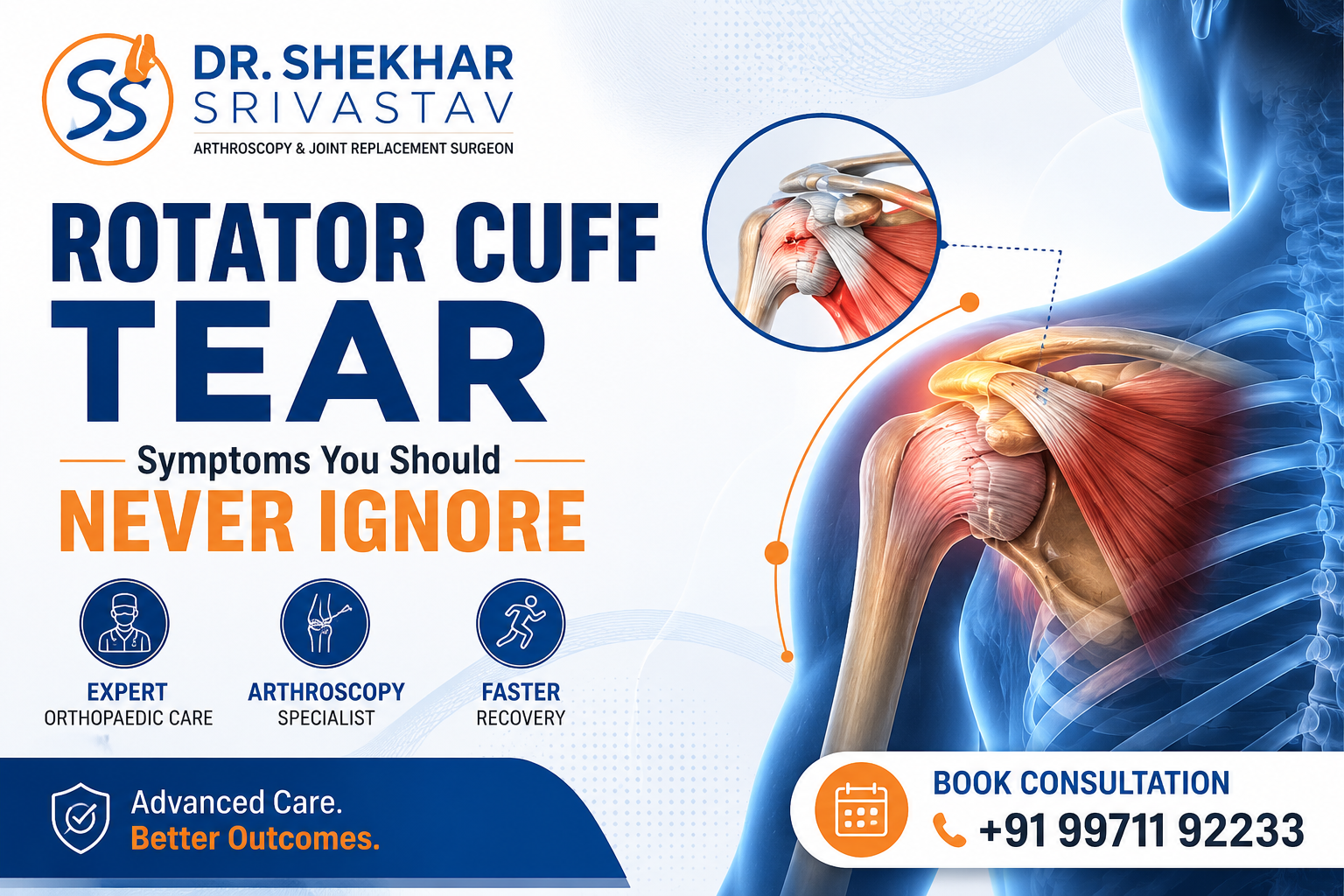
A rotator cuff tear is one of the most common shoulder injuries, affecting athletes, fitness enthusiasts, office workers, and older adults alike. While some tears can heal with conservative treatment, others require advanced medical care to restore shoulder strength and function.
The biggest mistake many people make is ignoring shoulder pain or delaying treatment, which can lead to larger tears, chronic pain, muscle weakness, and a longer recovery period.
In this comprehensive guide, Dr. Shekhar Srivastav, a leading shoulder and sports injury specialist in Delhi, explains the best ways to heal a rotator cuff tear while ensuring a smooth and timely recovery.
The rotator cuff is made up of four muscles and their tendons that stabilize the shoulder joint and allow you to lift and rotate your arm. A tear occurs when one or more of these tendons become partially or completely detached from the upper arm bone.
Rotator cuff tears may develop due to:
Delaying treatment can cause:
Seeking medical evaluation early often improves outcomes and may reduce the need for extensive treatment.
Do not ignore these symptoms:
If these symptoms last more than two weeks, consult a shoulder specialist.
Proper diagnosis is essential before starting treatment.
Dr. Shekhar Srivastav may recommend:
Tests to evaluate shoulder strength, stability, and range of motion.
To rule out fractures or arthritis.
The gold standard for confirming the size and location of a rotator cuff tear.
Useful in selected cases to assess tendon movement.
A precise diagnosis helps determine whether non-surgical treatment or surgery is the best option.
Avoid activities that increase pain, such as:
However, complete immobilization for long periods can lead to stiffness and muscle weakness. Follow your doctor's advice regarding safe shoulder movement.
Managing pain helps you participate in rehabilitation more effectively.
Treatment may include:
Avoid self-medicating without consulting a healthcare professional.
Physiotherapy is one of the most important parts of rotator cuff tear recovery.
A structured rehabilitation program focuses on:
Perform exercises only under the guidance of a qualified physiotherapist.
Proper nutrition plays an important role in tissue repair.
Include foods rich in:
Supports tendon and muscle healing.
Examples:
Essential for collagen formation.
Sources include:
May help reduce inflammation.
Examples:
Help maintain healthy bones and muscles.
Stay well hydrated and limit processed foods and excessive sugar.
To prevent delays in healing, avoid:
Pain is a signal that your shoulder needs evaluation.
Premature return to activity increases the risk of re-injury.
Inconsistent rehabilitation can slow recovery and reduce shoulder strength.
Avoid heavy lifting until your doctor clears you.
Smoking reduces blood supply to tendons and can impair healing.
Not all rotator cuff tears require surgery.
However, surgery may be recommended if:
Dr. Shekhar Srivastav specializes in arthroscopic rotator cuff repair, a minimally invasive procedure that uses a tiny camera and specialized instruments to repair torn tendons.
Recovery varies depending on the severity of the tear and the treatment chosen.
Following your rehabilitation plan consistently is the key to optimal recovery.
Protect your shoulders by:
Dr. Shekhar Srivastav is a trusted orthopedic surgeon and sports injury specialist with extensive experience in shoulder arthroscopy and rotator cuff repair.
Patients choose him for:
Healing a rotator cuff tear without delaying recovery requires early diagnosis, the right treatment, and a commitment to rehabilitation. Ignoring symptoms or returning to activity too soon can prolong recovery and increase the risk of permanent shoulder damage.
If you are experiencing ongoing shoulder pain, weakness, or restricted movement, consult Dr. Shekhar Srivastav for a thorough evaluation and a personalized treatment plan. Timely care can help you regain strength, restore mobility, and return to your normal routine safely.
Yes. Many partial tears respond well to rest, physiotherapy, medications, and activity modification. Complete tears may require surgical repair.
Recovery can take 6–12 weeks for mild injuries, while recovery after surgery typically takes 4–6 months. Athletes may need up to 9 months before returning to full activity.
Only perform exercises recommended by your doctor or physiotherapist. Avoid heavy lifting or overhead activities until your shoulder has healed.
Yes. Delaying treatment can allow the tear to enlarge, increase muscle weakness, and reduce the effectiveness of future treatment.
Physiotherapy is highly effective for many partial tears, but large or complete tears may require surgery for optimal recovery.
A balanced diet rich in protein, vitamin C, omega-3 fatty acids, calcium, and vitamin D supports tissue healing and recovery.
Dr. Shekhar Srivastav is an experienced shoulder and sports injury specialist in Delhi, offering advanced arthroscopic surgery, non-surgical treatment, and personalized rehabilitation for rotator cuff injuries.